Medical Unit I
Clinical Departments
Medical Unit I
Faculty
NAME | DESIGNATION | QUALIFICATION | CONTACT INFORMATION |
| Prof. Dr. Zahra Nazish | Professor (HOD) Chairperson Department of Medicine | FCPS | zahranazish@gmail.com |
| Dr. M. Usman Sadiq | AP. Medicine | FCPS | rahimarif@yahoo.com |
| Dr. Aftab Akbar | AP. Medicine | FCPS | draftabakbarmultan@gmail .com |
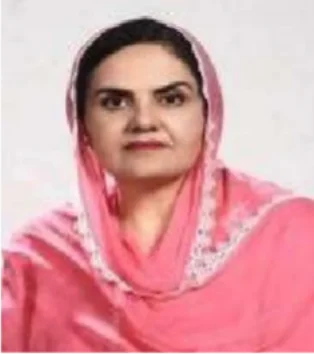
PROF. DR. ZAHRA NAZISH (HOD)
Email: zahranazish@gmail.com
Postgraduate Programme (FCPS Medicine & MD Medicine) – Department of Medicine Nishtar Medical University Multan
Mission Statement
To train competent, ethical, and compassionate physicians through evidence-based education, patient-centered care, clinical research, and lifelong learning—serving the healthcare needs of our society and advancing the standards of medicine in Pakistan.
Programme Learning Objectives (PLOs)
- Clinical Competence:
To equip postgraduate trainees with advanced medical knowledge, diagnostic and practical skills in internal medicine for independent and safe patient care. - Professionalism and Ethics:
To exhibit empathy and ethical behaviour in academics, clinical practice and research. - Research and innovation:
To promote a culture of research, innovation, and critical thinking relevant to local and global health challenges. - Teaching and Leadership:
To develop teaching skills and leadership qualities to prepare future mentors, and healthcare leaders. - Communication and Teamwork:
To strengthen communication skills for effective interaction with patients, families, and multidisciplinary teams. - Continuous Professional Development:
To instill habits of self-assessment and lifelong learning for continuous improvement in medical knowledge and practice.
Strategic Plans (Over 4 Years)
Action | Time frame | Responsibility | Resources | Monitoring and evaluation (KPIs) | |
1. Strengthen Clinical Training o Conduct regular grand rounds for case based learning. o Assign emergency and outpatient duties to increase exposure to acute and out patient cases o Implement structured subspecialty rotations with clearly defined learning objectives | 4 years | Faculty | Human | Use of DOPS and Mini-CEX for formative assessment and feedback forms | |
2. Professionalism o Encourage trainees to learn ethics and professionalism by role modelling o Conduct annual workshops on professionalism
| 2 years | Faculty
| Financial + Human resources | Use of DOPS and Mini-CEX for formative assessment and feedback | |
3. Research Capacity Building o Conduct research methodology workshops annually to enhance research skills. o Facilitate timely IRB approvals. o Encourage residents for publication in recognized journals and participate in national conferences.
| 2 years | Supervisor | Financial resources | Number of workshops; Certificate of IRB-approval projects; publications and presentations logged | |
4. Academic Development o Arrange monthly topic presentations, journal clubs, CPCs to promote critical thinking. o Engage residents in teaching of undergraduates to develop teaching skills. o Hold mortality meetings and clinical audits monthly to improve clinical care and outcomes | 4 years | Supervisor and other faculty | Human + financial (classroom, multi media) | Participation records; peer & student feedback; audit reports |
|
5. Communication skills o Conduct communication skills workshop at least once during the training period o Encourage to team work and collaboration among trainees
| 2 years | Faculty and Supervisor |
| Feedback forms; peer and faculty evaluation of teamwork & communication |
|
Programme Outcomes (POs) After3 years of completion of programme
Upon successful completion of the programme, the postgraduate trainee will be able to:
- Diagnose and Manage:
Independently diagnose and manage a wide spectrum of acute and chronic medical conditions with appropriate use of diagnostic tools and therapeutic interventions. - Demonstrate Professionalism:
Exhibit ethical and professional behaviour in clinical, academic, and research settings. - Conduct and Present Research:
Design, conduct, and defend clinical research with understanding of biostatistics and medical writing. - Teach and Train:
Deliver structured teaching sessions and bedside instructions to undergraduates and junior colleagues. - Communicate Effectively:
Communicate clearly and empathetically with patients, caregivers, and peers, respecting sociocultural sensitivities. - Engage in CPD:
Participate in continuous professional development (CPD) and quality improvement activities throughout their career.
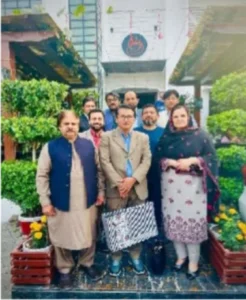
Group Photo
INTRODUCTION OF DEPARTMENT
Goals and Objectives:
- Clinical Competence:
To equip postgraduate trainees with advanced medical knowledge, diagnostic and practical skills in internal medicine for independent and safe patient care.
- Professionalism and Ethics:
To exhibit empathy and ethical behavior in academics, clinical practice and research.
- Research and innovation:
To promote a culture of research, innovation, and critical thinking relevant to local and global health challenges.
- Teaching and Leadership:
To develop teaching skills and leadership qualities to prepare future mentors, and healthcare leaders.
- Communication and Teamwork:
To strengthen communication skills for effective interaction with patients, families, and multidisciplinary teams.
- Continuous Professional Development:
To instill habits of self-assessment and lifelong learning for continuous improvement in medical knowledge and practice.
Undergraduate Programs
1. MBBS
2. BDS
3. D-pharmacy
4. BSNutrition
5. BSOrthotics
1. FCPSMedicine
2. MDMedicine
Postgraduate programs (if any)
1. FCPSMedicine
2. MDMedicine
HEALTH SERVICES & STATE OF ART FACILITIES:
- Medical ward 10 provides health services like basic admission, monitoring, treatment, emergencies, labs, and procedures.
Academic and teaching facilities
- Teaching rounds for undergraduate and postgraduate students
- Journal clubs
- Bedside teaching, journal clubs, case presentations, CPCs (clinicopathological conferences).
- Clinical audits
- Mortality review meetings
- Research opportunities for residents.
- Library, internet access, audiovisual aids
Clinical Facilities
- State of the art facilities:
- Indoor services: admission, daily consultant rounds, specialist consultations (medicine, surgery, allied departments).
- Central Oxygen, monitors, crash cart, EMR, ICU Access, and infection Control
Diagnostic Procedures:
- Lumbar puncture, pleural tapping, ascitic tap, central line insertion, etc.
Infrastructure
- Totat 52 beds.
- Two bays with24 beds for female patients,
- Two bays with 24 beds for male
- Two rooms with four beds as isolation rooms for sick or infections patients.
- Two beds with attached cardiac monitors.
- Two air-conditioned class rooms with multi media facilities
- Two separate male and female PGR Duty Rooms
- One house officers duty room
- SR office
- Professor and AP offices
- Admin office
- Waiting area for attendants in corridor
- CCTV cameras